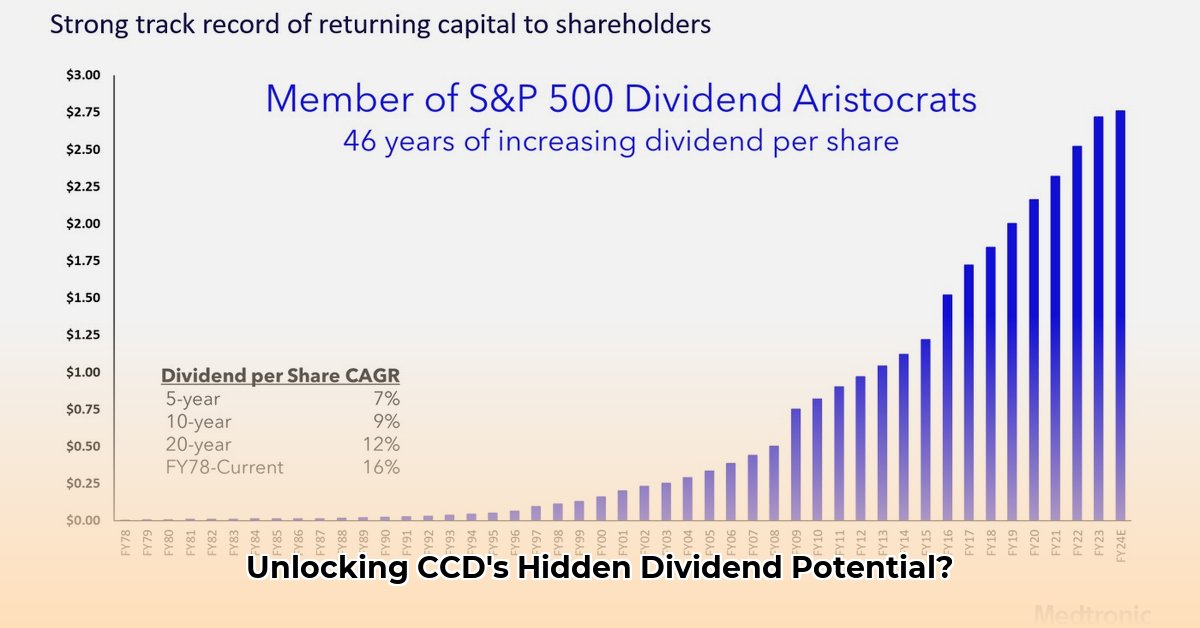
CCD Dividend History and Current Status: A High-Yield Enigma
The Calamos Dynamic Convertible and Income Fund (CCD) offers a compelling proposition for income-seeking investors: a substantial 9.46% dividend yield, consistently delivering $0.195 per share monthly since at least 2020. This consistent payout represents a significant potential income stream. However, a critical lack of readily available data obscures a complete risk assessment, raising crucial questions about the long-term sustainability of this seemingly attractive yield. This analysis explores CCD’s dividend history, highlighting the known facts and critical data gaps that necessitate a cautious approach for potential investors.
Consistent Monthly Payments: A Closer Look
CCD's unwavering monthly dividend of $0.195 per share since 2020 is undeniably attractive. This consistency provides a degree of predictability highly valued by many investors seeking stable income. However, this alone is insufficient for a thorough evaluation. The seemingly unwavering payments beg the question: What underlying factors drive this consistent payout, and how sustainable is it likely to be? Understanding this requires a deeper dive into the fund's financials and a critical examination of missing data points.
Unpacking the Risks: The Missing Data and Its Implications
The most significant obstacle hindering a comprehensive risk assessment is the absence of readily available key metrics: the payout ratio and a detailed dividend growth history. These omissions create considerable uncertainty.
The payout ratio, the percentage of earnings distributed as dividends, provides a crucial measure of the dividend's sustainability. A high payout ratio, without further context, raises concerns about the fund's ability to maintain payouts during periods of reduced earnings or market volatility. Conversely, a low payout ratio might suggest greater potential for future dividend increases. Without knowing the payout ratio, we lack a crucial piece of the puzzle.
The lack of a detailed dividend growth history similarly limits our understanding of the dividend's trajectory. While the consistent payment is positive, an absence of historical increases raises questions about future growth potential. Has the dividend remained static due to a deliberate strategy? Or does it reflect underlying challenges to the fund's profitability? The lack of this data makes reliable projections impossible.
Risk Assessment: A Cautious Perspective
The gaps in available information represent significant risk factors:
| Risk Factor | Description | Likelihood | Potential Impact | Mitigation Strategies |
|---|---|---|---|---|
| Unsustainable Dividend Payments | The fund may be distributing more than it earns, jeopardizing future payments. | Moderate | High | Thoroughly research CCD's financial statements; consult with a financial advisor. |
| Market Volatility | Market downturns can negatively impact fund performance and consequently, dividend payouts. | Moderate | Moderate | Diversify investments across different asset classes; consider a longer-term investment horizon. |
| Lack of Transparency | Insufficient public information hinders comprehensive risk assessment and informed decision-making. | High | Moderate | Advocate for enhanced transparency from CCD's management; scrutinize available financial disclosures. |
| Interest Rate Changes | Rising interest rates could diminish the attractiveness of CCD's fixed income payouts. | Moderate | Moderate | Monitor economic conditions and adjust investment strategy accordingly. |
This matrix highlights the inherent uncertainty associated with investing in CCD given the current lack of transparency.
Actionable Insights for Investors
Before investing in CCD, a careful assessment of personal risk tolerance and investment goals is crucial.
Step 1: Self-Assessment: Evaluate your own risk tolerance and financial objectives. This is the foundation of any responsible investment strategy.
Step 2: Define Your Investment Timeline: A short-term investment horizon necessitates a different approach compared to a long-term strategy.
Short-Term (0-1 year): The high yield is attractive, but the information gaps necessitate extreme caution. Closely monitor market conditions and dividend announcements. This investment is only suitable for high-risk tolerance investors prepared for potential volatility.
Long-Term (3+ years): A longer timeframe allows for weathering market fluctuations. However, diversification remains crucial, and only a small portion of your portfolio should be allocated to CCD. Thorough due diligence is paramount.
Step 3: Seek Professional Advice: A financial advisor can provide personalized guidance based on your individual circumstances and risk profile. Their expertise can navigate the uncertainties presented by the limited data.
Step 4: Advocate for Enhanced Transparency: Encourage CCD's management to provide more detailed financial information. This is in the best interest of all investors.
Conclusion: High Yield, but Proceed with Caution
The 9.46% dividend yield offered by CCD is undeniably appealing. However, the significant lack of transparency concerning the payout ratio and dividend growth history necessitates a cautious approach. While the high yield is enticing, a well-informed decision requires a thorough understanding of the risks involved. Diversification, professional advice, and a call for increased transparency from CCD's management are essential for responsible investing in this fund.